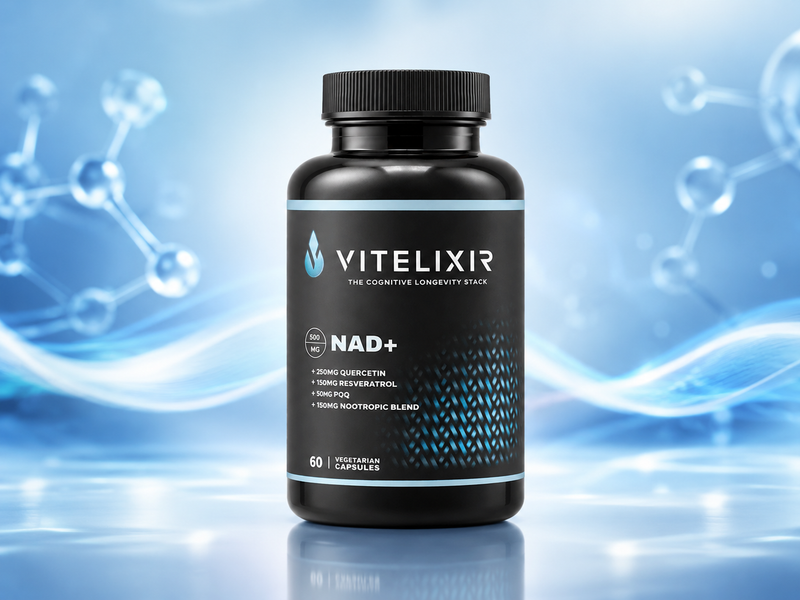
If you've spent any time researching longevity, energy, or cellular health in the last few years, you've probably come across NAD+. It's become one of the most talked-about compounds in the wellness and biohacking space — and for good reason.
But unlike most trends that fade, the science behind NAD+ is real, and it's not slowing down.
Here's what NAD+ actually is, why your body needs it, and what happens when levels start to slip.
What Is NAD+?
NAD+ stands for nicotinamide adenine dinucleotide. It's a coenzyme found in every cell of your body. Without it, your cells literally couldn't function.
Think of NAD+ as the spark plug for your cellular machinery. It's involved in:
- Energy production — converting the food you eat into usable cellular fuel (ATP)
- DNA repair — fixing the everyday damage your cells accumulate
- Mitochondrial function — keeping the energy centers of your cells running cleanly
- Cellular communication — activating proteins called sirtuins that play a role in healthy aging*
Every breath you take, every workout you push through, every time your brain fires a thought — NAD+ is part of the machinery making it happen.
Why NAD+ Matters More As You Age
Here's where it gets interesting (and a little frustrating).
Research suggests that NAD+ levels naturally decline as you age. By the time you hit your 50s and 60s, your NAD+ levels may be a fraction of what they were in your 20s.
That decline matters because as NAD+ drops, the systems that depend on it — energy, repair, recovery, cognitive function — start running on fewer resources.
Many men describe it in plain terms:
- "I just don't have the energy I used to."
- "Recovery from workouts takes longer."
- "My focus isn't as sharp."
- "I feel tired even when I've slept enough."
Some of that is just life. But declining NAD+ may be part of the picture.
What Causes NAD+ to Decline?
Several factors contribute to lower NAD+ levels over time:
1. Age itself. This is the big one. Research consistently shows NAD+ levels dr